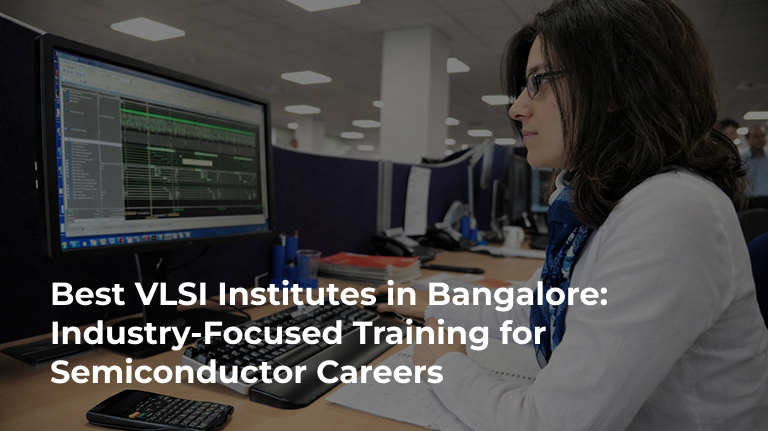
Graduating with a degree in electronics or ECE is one thing; being prepared for real chip design workflows is another. Many students quickly realize that academic labs rarely cover the complexities of ASIC, FPGA, or SoC development flows.
This is why many learners explore the best VLSI institutes in Bangalore to strengthen their understanding of RTL design, verification, FPGA implementation, and backend physical design through structured semiconductor training.
Bangalore has become one of India’s leading semiconductor hubs, hosting design centers, embedded system companies, and FPGA development teams. With growing semiconductor investments in India, skilled VLSI engineers are increasingly in demand across ASIC, FPGA, and SoC development teams.
Why Practical Exposure Matters
The difference between theoretical understanding and implementation readiness often comes from exposure to design analysis, debugging, and simulation workflows.
Writing a Verilog module is only one part of the process. Engineers must also understand why timing reports show hold violations or why simulations fail under specific corner-case conditions.
Leading institutes focus on implementation-oriented learning where students work on waveform analysis, verification tasks, debugging exercises, and RTL design activities. This approach helps learners move beyond syntax memorization toward developing an engineering-oriented problem-solving approach.
Core Learning Areas
A comprehensive VLSI training program in Bangalore usually includes:
- Digital design fundamentals and Verilog coding
- RTL design and ASIC design flow
- Functional verification and SystemVerilog basics
- FPGA implementation concepts
- Physical design fundamentals including placement, routing, and timing closure
- Design-for-Testability (DFT) basics
Many institutes also include mini-projects and guided assignments.
For example, learners may simulate memory interfaces, build verification environments, or implement small SoC modules to better understand semiconductor design workflows in a practical setting.
Importance of Tool-Based Learning
VLSI is a highly tool-driven domain. Understanding concepts such as timing closure or routing strategies becomes more effective when learners observe implementation behaviour through design tools and reports.
Many semiconductor training programs provide exposure to tools such as:
- Synopsys Design Compiler
- PrimeTime
- Cadence Innovus
- Simulation environments for RTL and verification
Tool-based exercises help learners analyze timing violations, debug RTL behaviour, and understand placement and routing impact during implementation.
This exposure also supports interview preparation, where recruiters often assess how candidates approach debugging, timing analysis, and verification challenges.
Challenges Freshers Often Face
Many beginners struggle to connect RTL code with verification outcomes or interpret timing analysis reports effectively.
Concepts such as setup and hold violations, slack, skew, and routing congestion may initially seem abstract until students experience them through simulations and implementation exercises.
Institutes that provide mentorship, guided lab sessions, and continuous technical feedback help learners gradually strengthen analytical thinking and debugging skills.
How to Choose the Right Institute
Students exploring VLSI institutes in Bangalore should evaluate whether the program includes:
- Coverage of design, verification, and physical implementation
- Project-based assignments and lab exercises
- Access to industry-standard tools
- Mentor support for debugging and technical doubts
- Interview preparation and placement guidance
Programs that combine conceptual understanding with implementation-focused learning often provide stronger preparation for semiconductor careers.
Career Opportunities After Training
Learners completing VLSI training may prepare for roles such as:
- RTL Design Engineer
- ASIC Verification Engineer
- FPGA Engineer
- Physical Design Engineer
- DFT Engineer
Freshers often begin with simulation support, block-level design tasks, verification assignments, or timing analysis activities before progressing toward larger semiconductor responsibilities.
Structured technical training also helps learners communicate their understanding more confidently during interviews and project discussions.
Why ChipEdge Stands Out
ChipEdge offers semiconductor training programs focused on RTL design, verification, FPGA implementation, and backend physical design concepts.
The programs combine guided learning, project-based assignments, implementation exercises, and mentor support to help learners strengthen technical understanding and industry readiness.
Students are introduced to debugging workflows, timing analysis concepts, verification methodologies, and implementation-oriented tasks that align with semiconductor engineering environments.
FAQ
What topics do VLSI institutes typically cover?
Programs generally include digital design, RTL coding, verification, SystemVerilog, FPGA basics, physical design concepts, timing analysis, and tool-based exercises.
Are these programs suitable for freshers?
Yes. Most programs begin with foundational concepts before gradually progressing toward advanced semiconductor workflows.
Is access to tools important in VLSI training?
Yes. Exposure to industry-standard tools helps learners better understand implementation behaviour, debugging, timing analysis, and verification workflows.
Can VLSI training improve placement readiness?
Programs that include projects, lab sessions, mentor guidance, and interview preparation can help strengthen technical confidence and job readiness.
Which roles can learners pursue after VLSI training?
Learners may prepare for roles such as RTL Design Engineer, ASIC Verification Engineer, FPGA Engineer, Physical Design Engineer, and DFT Engineer.
CTA
Build stronger semiconductor skills with ChipEdge VLSI training programs focused on RTL design, verification, physical implementation, timing analysis, and ASIC, FPGA, and backend development workflows.


