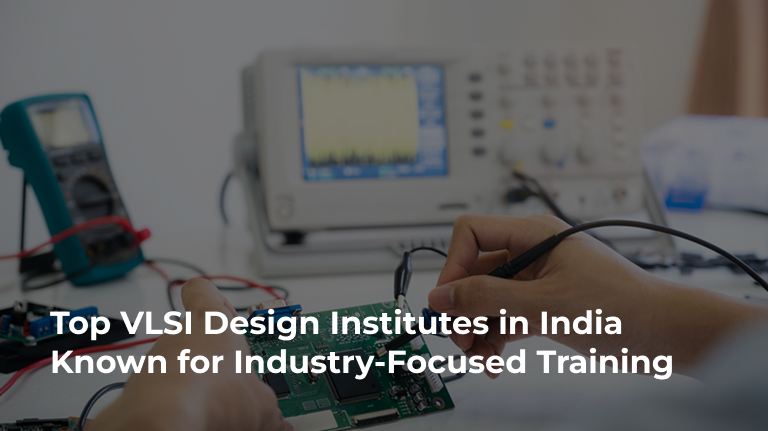
For many engineering students, VLSI design becomes interesting long before it becomes clear. It usually starts with a subject, a project idea, or a conversation with someone already working in the field. The excitement builds, but soon another question appears: Where do I actually learn this properly?
College courses often introduce VLSI concepts, but they rarely go deep enough. Students understand the basics, yet feel unsure when they think about real jobs. That gap is what pushes many learners to look for external training institutes across India.
Why Industry-Focused VLSI Training Matters
VLSI design is not just about knowing definitions or equations. In the industry, engineers spend most of their time working with tools, analyzing reports, and fixing design issues that do not have straightforward answers. This reality surprises many fresh graduates.
Industry-focused training tries to prepare students for this environment. Instead of teaching topics in isolation, it explains how design stages connect and why decisions matter. Over time, students stop memorizing steps and start understanding the reasoning behind them.
What Actually Makes an Institute Worth Considering
One mistake students often make is trusting advertisements too quickly. Almost every institute claims to offer “complete” training. The real difference shows up in the classroom and labs.
A good institute spends time on fundamentals. Trainers explain concepts slowly when needed and do not rush through difficult topics. Regular lab sessions are essential. Without hands-on work, VLSI remains abstract and confusing, especially for beginners.
Trainer experience also plays a big role. Instructors who have seen real projects tend to explain things differently. They talk about mistakes, limitations, and why some “ideal” solutions do not work in practice.
Bangalore’s Influence on VLSI Learning
Bangalore has grown into a major semiconductor hub over the years. Many design centers are based there, which naturally shapes the training ecosystem. Because of this, several VLSI institutes in Bangalore focus strongly on practical and industry-aligned learning.
Students trained in such environments often gain exposure to current tools and workflows. More importantly, they develop a better understanding of what companies actually expect from entry-level engineers.
Learning Through Projects, Not Just Slides
Projects are where many students finally feel things coming together. Early on, design steps may feel disconnected. During project work, those connections become clearer.
Students face real issues—timing failures, design constraints, and unexpected results. Solving these problems builds confidence slowly. It also helps students speak more naturally during interviews, since they can explain what they actually did instead of repeating textbook answers.
Looking at Institutes Across India
When students search for the best vlsi design training institute in india, they often compare fees, duration, and placement claims. While these factors matter, they do not tell the full story.
Better questions include:
Does the institute offer enough hands-on exposure?
Are students encouraged to think, not just follow instructions?
Is the training aligned with how industry teams actually work?
Institutes that focus on long-term skill development usually prepare students better than those promising quick results.
Tool Exposure and Learning Comfort
VLSI tools can feel intimidating at first. Reports are detailed, errors are confusing, and progress can seem slow. This stage is normal and unavoidable.
Institutes that provide flexible lab access help students learn at a comfortable pace. Being able to repeat experiments and revisit concepts makes a big difference. Learning improves gradually, not overnight.
Placement Support Has Its Place
Placement assistance can be helpful, especially for students entering the job market for the first time. Resume reviews and mock interviews give direction.
Still, these supports work best when students have solid technical understanding. Strong skills always speak louder than prepared answers.
Finding the Right Fit
Not every institute suits every learner. Some students need slow-paced foundational training. Others want deeper tool exposure and challenging projects. Even the best vlsi institute in bangalore may not be ideal for everyone.
Understanding your own learning needs is just as important as comparing institutes.
Conclusion
Choosing a VLSI design institute is a meaningful step for students planning a future in semiconductor design. Institutes that emphasize practical learning, realistic tools, experienced trainers, and steady guidance help learners move from theory to real-world application. Making a thoughtful choice early can save time and confusion later. With its focus on industry-aligned training and hands-on learning, chipedge supports students and professionals in building VLSI skills that are relevant, practical, and ready for real design challenges.


